By The 888 VaultPublished 8 min read
A risk/reward ratio compares two planned distances: the amount exposed if an idea is invalidated and the amount available if a stated target is reached. It says nothing by itself about whether either event is likely.
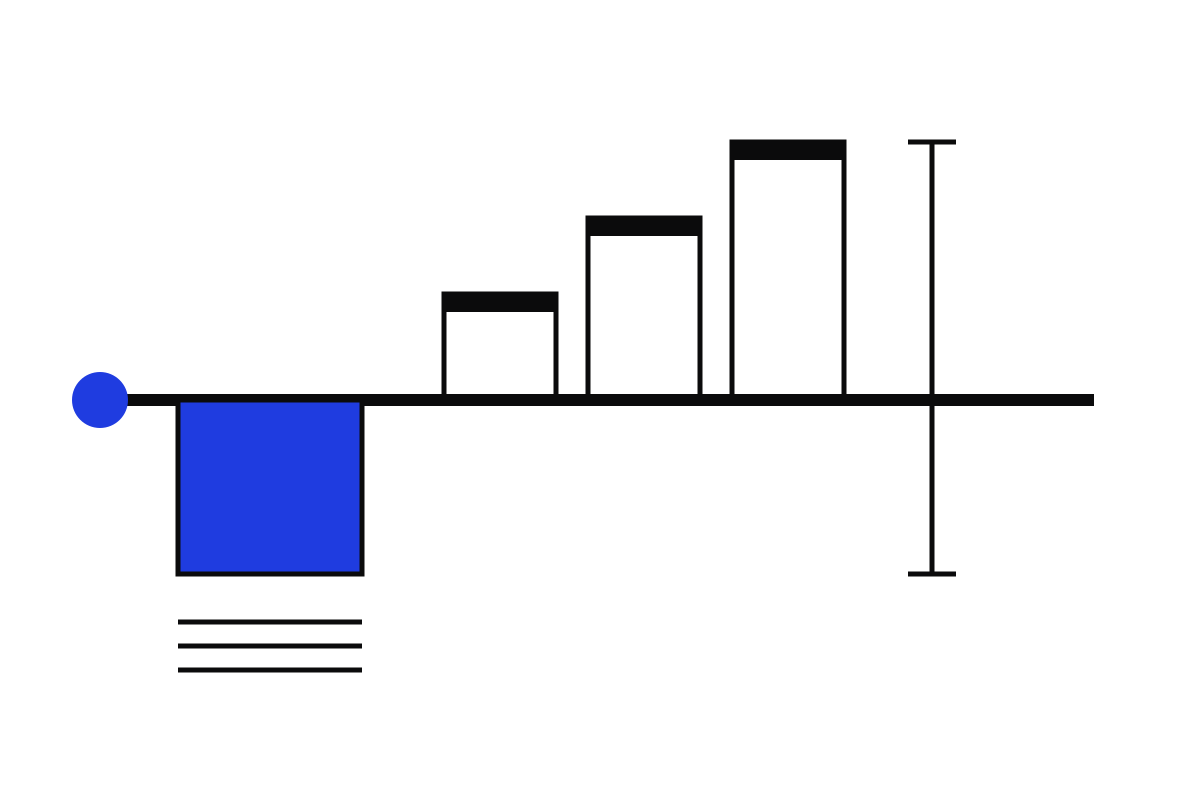
Risk/reward describes the geometry of one planned trade. Expectancy requires the distribution of many completed trades. Confusing the first with the second turns a neat ratio into a claim the data never made.
The two distances
The risk side begins at the planned entry and ends where the idea is considered wrong. The reward side begins at the same entry and ends at a stated exit or target. Dividing one distance by the other produces the ratio.
That definition contains no prediction. It does not say price will reach either level, that an order will fill at the drawn price or that the person will follow the plan when movement begins.
It also measures price distance before position size. The amount of account capital exposed depends on how much is held across that distance, which is why the position-sizing decision remains separate.
Why a larger reward number proves nothing
Any target can be drawn farther away. Doing so makes the displayed reward larger without adding evidence that price can reach it. The ratio improves on paper while the event being counted may become less frequent.
This is the central failure of ratio screenshots. They show the size of a possible win and hide the rate at which that win occurs. A rare large gain can belong to the same result distribution as frequent smaller gains or repeated losses; the ratio alone cannot separate them.
A ratio becomes information only after it is paired with completed observations collected under the same written rules.
The missing half is frequency
Expectancy combines the average size of gains and losses with how often each one occurs. It belongs to a sample of completed decisions, not to one planned chart.
This is why a journal matters. The plan written before entry supplies the intended risk and reward. The review after exit records what actually happened. Without both, the data silently replaces the original plan with a cleaner story.
A small sample also cannot establish that the distribution is stable. The purpose of the record is description and review, not certainty about the next trade.
Planned ratio and realised ratio diverge
The planned exit may not be the actual exit. A market can move through a stop, an order can fill at another price, a position can be closed early, or the target can be moved. Fees and spread also sit outside the clean distance drawn on the chart.
Those differences are not formatting details. They determine whether the ratio being discussed belonged to the plan or to the completed trade.
A useful record keeps both values. Replacing the planned value with the realised one makes it impossible to see whether the method failed or whether execution departed from it.
The ratio does not define account risk
Two people can draw the same levels and expose very different portions of their accounts. The ratio remains identical because it compares distances, while the consequence of being wrong changes with position size.
Correlated positions add another layer. Several trades can each look small and still express the same underlying idea, so the account is exposed to one event through several labels.
FINRA defines risk broadly as the possibility of a negative financial outcome that matters to the investor and distinguishes risks such as liquidity and concentration. That wider definition is why one chart ratio cannot describe the whole account.Sources for this passage: FINRA — understanding investment risk
What belongs in the journal
Before entry, record the invalidation, intended exit, planned position size and the reason those levels exist. After exit, record the actual fill, actual exit, costs and whether the written rule was followed.
The comparison answers a narrower and more useful question than whether the trade won: did the completed action match the plan, and did the collection of plans behave as described?
Nothing in that review produces a signal. It provides evidence about a repeated process, including the occasions when a clean ratio concealed poor execution or an unsupported target.